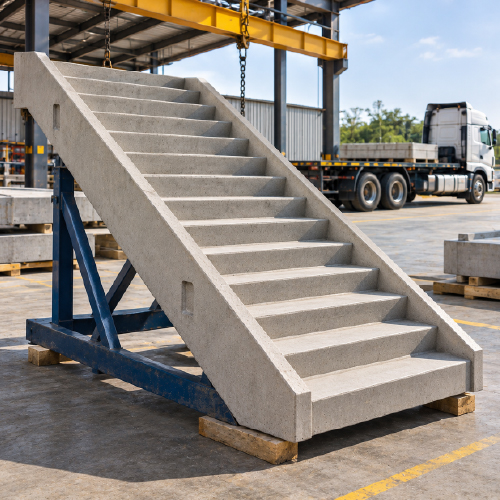
Precast Concrete Staircase Lead Times South Africa: From Order to Installation

Construction projects run on schedules. When one component arrives late, it can affect other trades, delay progress and increase pressure on the entire building programme.

For contractors and developers, understanding precast concrete staircase lead times in South Africa is an important part of planning a successful project.

Unlike traditional cast-in-place concrete staircases, precast staircases are manufactured off-site before being delivered and installed. This allows staircase production to take place while other construction activities continue.

However, manufacturing timelines depend on several factors, including staircase design, project specifications, production requirements and delivery arrangements.

Understanding the process from initial enquiry to final installation can help construction teams plan more effectively and avoid unnecessary delays.

How Long Does It Take to Manufacture a Precast Concrete Staircase?

The time required to manufacture a precast concrete staircase depends on the complexity of the design, the number of units required, production capacity and project specifications.

There is no single manufacturing timeframe that applies to every staircase project.

A straightforward staircase configuration may require less preparation than a complex development involving multiple staircase units, specialised dimensions or challenging installation requirements.

Manufacturing also involves several stages, including preparation, mould setup, reinforcement placement, concrete casting, curing and quality checks.

For this reason, contractors should confirm the anticipated production schedule with their staircase manufacturer before finalising their construction programme.

The best approach is to involve the manufacturer early, provide accurate project information and agree on realistic manufacturing and delivery milestones.

Understanding the Precast Staircase Process: From Order to Installation

Precast staircase manufacturing follows a sequence of important stages. Each stage contributes to the overall project timeline.

1. Initial Enquiry and Project Specifications

The process begins when the contractor, developer or project manager contacts the staircase manufacturer.

At this stage, the manufacturer needs to understand the requirements of the proposed staircase.

Information may include:

  • Architectural drawings

  • Structural specifications

  • Staircase dimensions and configuration

  • Number of staircase units required

  • Project location

  • Expected construction programme

  • Site access and installation requirements

Providing complete information early helps the manufacturer assess the project and identify
potential challenges.

Incomplete drawings or changes to specifications can delay the process before manufacturing even begins.

2. Design Coordination and Approval

Before production starts, the staircase requirements must be coordinated with the relevant project professionals.

This may involve confirming dimensions, structural interfaces, landing positions, support requirements and other details.

Where project-specific manufacturing or shop drawings are required, these may need review and approval before casting can begin.

This stage is particularly important because precast components must fit the intended building structure.

Changes made after manufacturing has started can be more difficult to accommodate.

Clear communication between the contractor, architect, engineer and staircase manufacturer helps reduce unnecessary revisions.

3. Manufacturing Preparation

Once the necessary information and approvals are in place, manufacturing preparation can begin.

Depending on the staircase configuration, this may involve preparing moulds, arranging reinforcement and scheduling production.

Standardised or repeated staircase configurations may offer manufacturing efficiencies, while unusual dimensions or more complex designs can require additional preparation.

The availability of manufacturing resources and the number of staircase units required will also influence scheduling.

4. Concrete Casting and Curing

During manufacturing, concrete is placed into prepared moulds containing the specified reinforcement and other required components.

The concrete must then develop sufficient strength before the staircase can be safely handled, transported or installed.

Curing is an essential part of the manufacturing process and should never be rushed simply to meet a construction deadline.

The required strength development depends on the concrete specification, manufacturing conditions and relevant engineering requirements.

A reliable production programme must allow for these factors.

5. Quality Checks and Manufacturing Completion

Before delivery, completed staircase components should undergo the appropriate quality checks.

These may include checking dimensions, surface condition, manufacturing details and compliance with the approved project requirements.

Any issues identified during production or inspection may need to be resolved before the staircase can leave the manufacturing facility.

Proper quality control helps reduce the risk of problems during installation.

6. Delivery to the Construction Site

Once the staircase components are ready, delivery must be coordinated with the construction programme.

Precast concrete staircases are substantial components that require suitable transport arrangements.

Delivery planning should consider:

  • Distance between the manufacturing facility and construction site

  • Transport requirements

  • Site access

  • Vehicle unloading arrangements

  • Availability of lifting equipment

  • Readiness of the installation area

Even when manufacturing is complete, a staircase cannot necessarily be delivered immediately if the construction site is not prepared to receive it.

7. Precast Staircase Installation

The final stage involves positioning and securing the staircase components in accordance with the approved project requirements.

Depending on the staircase system and site conditions, suitable lifting equipment may be required.

The supporting structure, access routes and installation areas must be ready before work begins.

Installation duration varies according to the number of staircase units, site access, lifting requirements and complexity of the project.

Effective coordination between the staircase specialist and main contractor can help minimise disruption.

What Factors Affect Precast Concrete Staircase Lead Times in South Africa?

Several factors influence how quickly a precast staircase can move from initial enquiry to installation.

Staircase Design and Complexity

Straightforward staircase configurations may be easier to manufacture than complex designs involving unusual dimensions, multiple landings or specialised structural requirements.

The more complex the design, the more important accurate planning and coordination become.

Number of Staircase Units

A project requiring one staircase has different manufacturing demands from a multi-storey development requiring numerous units.

However, repeated staircase configurations may allow more efficient production planning.

For larger developments, the manufacturer and contractor should agree on the sequence in which staircase units are required.

Drawing Approvals and Design Changes

Manufacturing cannot always proceed until the necessary project information has been confirmed.

Late drawing approvals, incomplete specifications or changes to dimensions can affect the production schedule.

Finalising critical details before manufacturing begins helps reduce this risk.

Manufacturing Capacity and Scheduling

Manufacturing facilities need to allocate production resources across different projects.

The manufacturer’s current workload, available moulds, production arrangements and material requirements can influence when a new staircase order can begin.

Contractors should therefore confirm production availability rather than assuming manufacturing can start immediately.

Delivery Location and Transport

Transport requirements vary depending on the location of the construction site and the size of the staircase components.

Projects in Johannesburg, Gauteng and other parts of South Africa may have different logistical requirements.

Delivery should be planned around realistic transport arrangements and site readiness.

Site Preparation and Installation Access

A completed staircase cannot be installed successfully if the supporting structure or installation area is not ready.

Restricted access, unsuitable lifting positions or unfinished structural work can delay installation.

Early site planning helps ensure the staircase can be installed when required.

Can Precast Staircases Help Reduce Construction Delays?

Yes. Precast concrete staircases can help reduce certain construction delays because much of the manufacturing process takes place away from the building site.

Traditional cast-in-place staircase construction requires formwork, reinforcement placement, concrete casting and curing at the final staircase location.

With precast construction, these activities can take place separately while other building work continues.

This creates opportunities for overlapping construction activities and reducing the amount of staircase-specific work required on-site.

However, precast construction does not automatically guarantee a faster overall project.

The benefits depend on manufacturing schedules, project coordination, transport arrangements and installation readiness.

When properly planned, precast staircase systems can contribute to a more efficient construction programme.

Why Early Ordering Matters for Contractors and Developers

One of the most effective ways to manage precast staircase lead times is to involve the manufacturer during the early stages of construction planning.

Waiting until the building urgently requires a staircase may create unnecessary pressure on manufacturing and delivery schedules.

Early engagement allows the project team to:

  • Confirm staircase requirements

  • Identify potential design challenges

  • Coordinate manufacturing information

  • Discuss production availability

  • Plan delivery arrangements

  • Assess installation access

  • Align staircase requirements with the construction programme

This is particularly important for developments requiring multiple staircase units.

For example, an apartment development may require staircases across several floors or building blocks.

Rather than waiting until every staircase is needed, the contractor and manufacturer can discuss the order in which components should be produced and delivered.

This can help ensure staircase availability aligns more closely with construction progress.

Planning Precast Staircase Deliveries for Multi-Storey Developments

Large residential, commercial and industrial developments often require careful coordination between manufacturing and installation.

For projects involving repeated staircase configurations, a phased delivery approach may be appropriate.

Instead of delivering every staircase component at once, the manufacturer and contractor can discuss deliveries according to the areas of the building that are ready.

This may help reduce unnecessary storage requirements and congestion on-site.

However, phased deliveries need to be agreed upon during planning and depend on the manufacturer’s production arrangements and the project’s logistical requirements.

The objective is to ensure the correct staircase components reach the correct installation areas at the appropriate stage of construction.

Common Mistakes That Can Delay Precast Staircase Projects

Even a well-planned construction project can experience delays when important details are overlooked.

Ordering Too Late

Contacting the staircase manufacturer shortly before installation is required may leave insufficient time for manufacturing and delivery.

Providing Incomplete Drawings

Missing dimensions, unclear specifications or unresolved structural details can delay manufacturing preparation.

Changing Designs After Approval

Late changes can affect mould preparation, manufacturing schedules and the suitability of components already produced.

Overlooking Delivery Access

A staircase may be ready for delivery, but restricted vehicle access or unsuitable unloading arrangements can prevent it from reaching the installation area.

Failing to Coordinate Installation

The supporting structure, lifting equipment and relevant construction teams need to be ready when installation is scheduled.

Avoiding these mistakes can help protect the overall construction programme.

Why Work With an Experienced Precast Staircase Manufacturer?

Manufacturing lead times are not simply about how quickly concrete can be cast.

Successful staircase delivery requires coordination between project specifications, manufacturing, quality checks, transport and installation.

Steps and Stairs specialises in preformed and prefabricated concrete staircase solutions for South African construction projects.

By manufacturing staircase components off-site, the company provides solutions that can support production efficiency, consistent quality and reduced on-site construction activity.

For contractors and developers, involving a staircase specialist early can help identify manufacturing and installation requirements before they affect the construction programme.

Plan Your Precast Staircase Project With Steps and Stairs

Understanding precast concrete staircase lead times in South Africa is an important part of effective construction planning.

From initial drawings and manufacturing preparation to delivery and installation, every stage requires coordination.

The earlier these requirements are considered, the easier it becomes to incorporate staircase production into the wider construction programme.

If you are planning a residential, commercial or industrial development, contact Steps and Stairs to discuss your precast staircase requirements.

Share your project drawings, specifications and anticipated construction schedule so the team can assess the requirements and discuss manufacturing, delivery and installation arrangements.

Frequently Asked Questions

Manufacturing lead times depend on staircase design, production requirements, the number of units and the manufacturer’s schedule. Contact Steps and Stairs with your project specifications to discuss the anticipated timeline.

Yes. Because precast staircases are manufactured off-site, production can take place while other construction activities continue, provided the project programme and manufacturing arrangements allow it.

Incomplete specifications, late design changes, manufacturing schedules, transport requirements, restricted site access and installation readiness can all affect delivery timelines.

Contractors should involve the staircase manufacturer during project planning where possible. This allows sufficient time to coordinate drawings, manufacturing requirements, delivery and installation.

Phased deliveries may be possible for projects requiring multiple staircase units. The delivery sequence should be agreed upon with the manufacturer and coordinated with site readiness and the construction programme.

Precast installation can reduce the amount of staircase construction performed on-site because the components are manufactured beforehand. Actual time savings depend on the staircase system, site conditions and installation requirements.

Share:

More Posts

Leave a Reply

Your email address will not be published. Required fields are marked *